'You get use to the smell'
2017
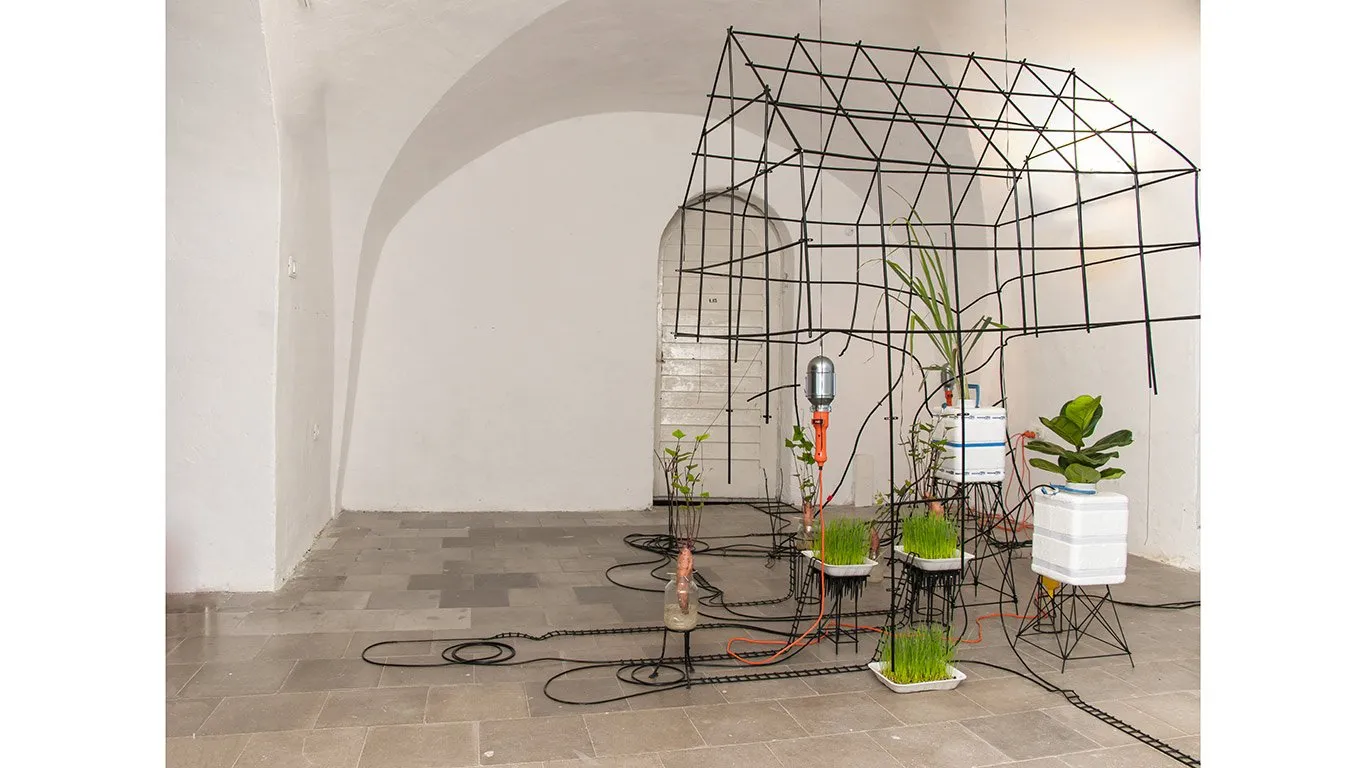
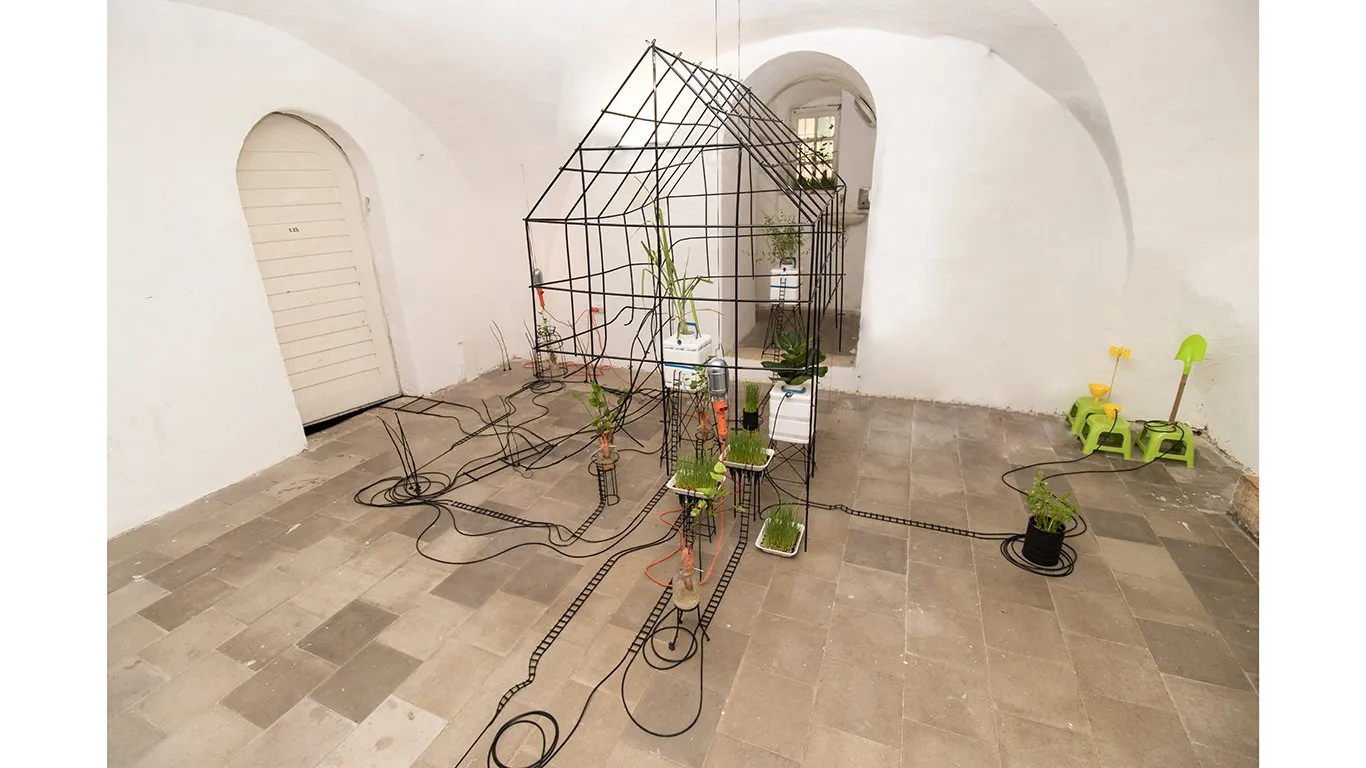
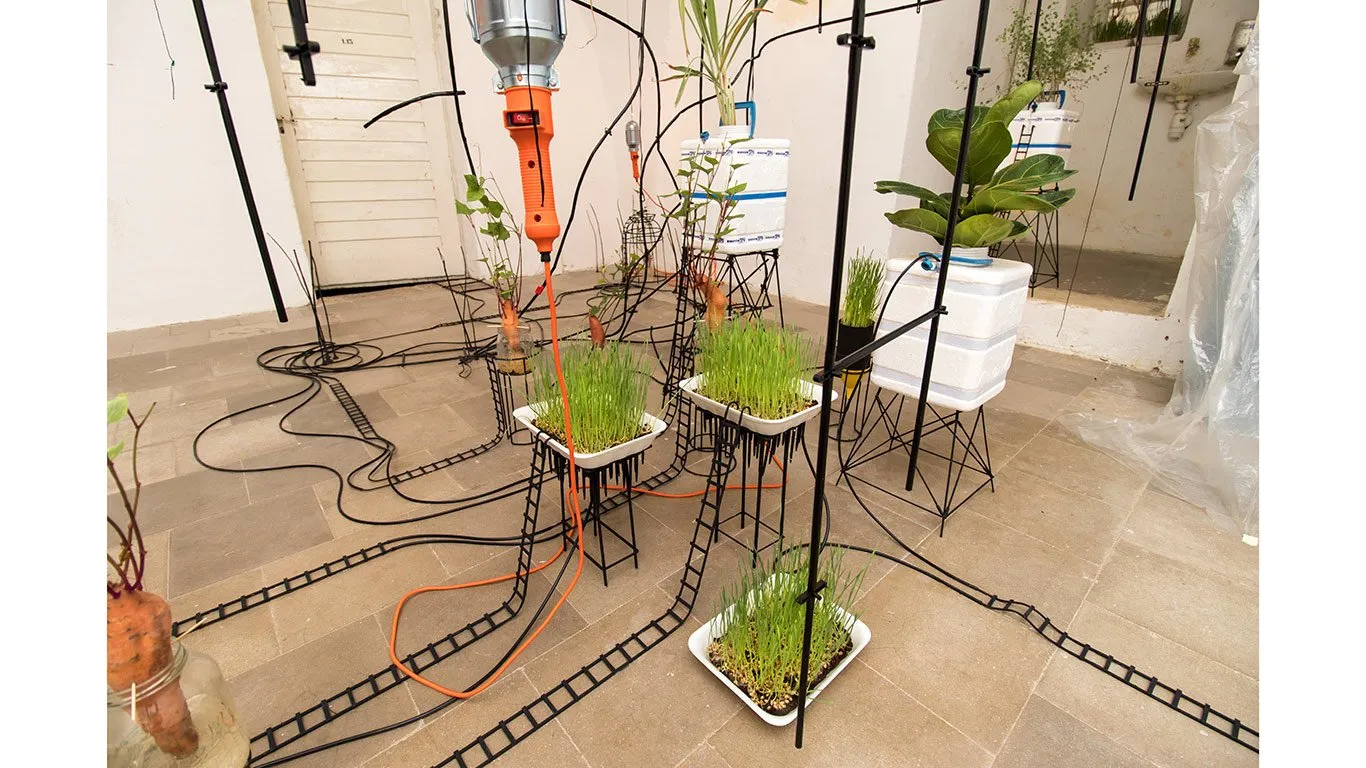
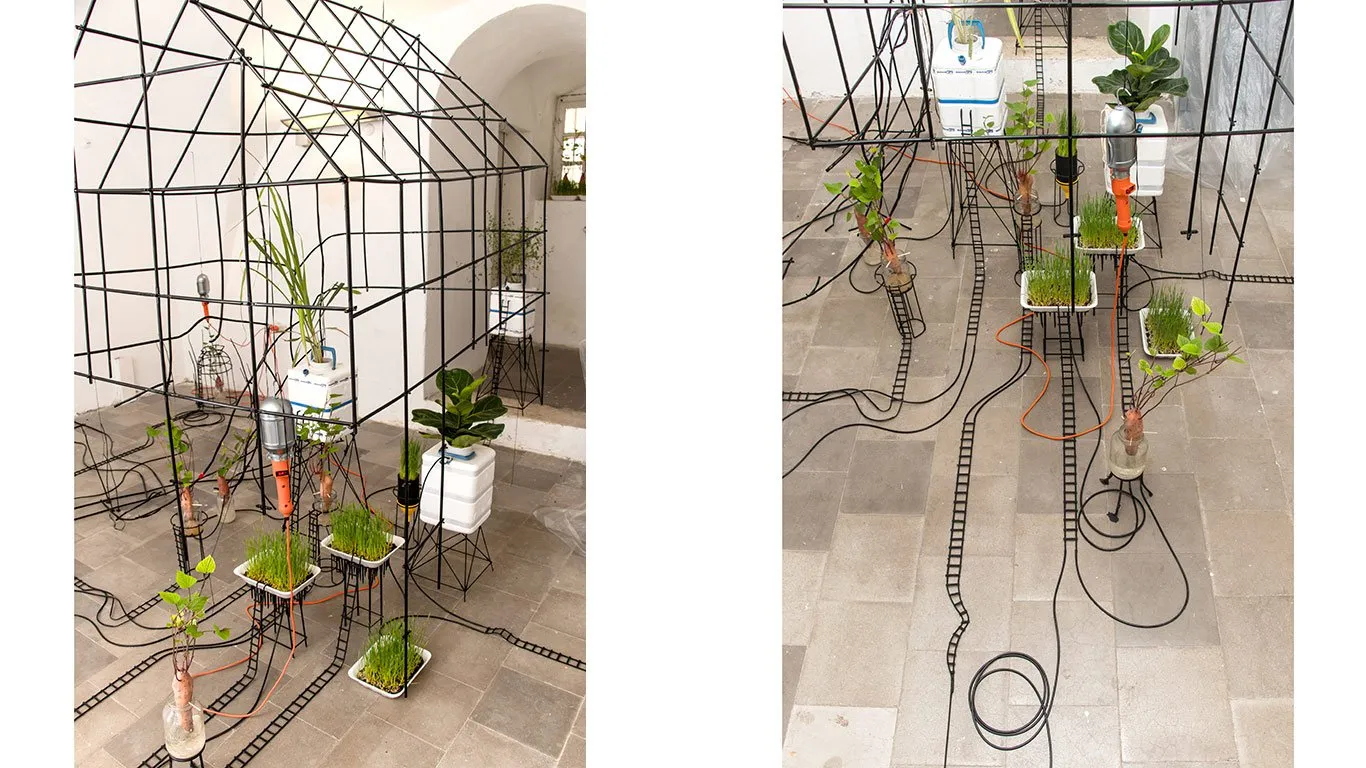
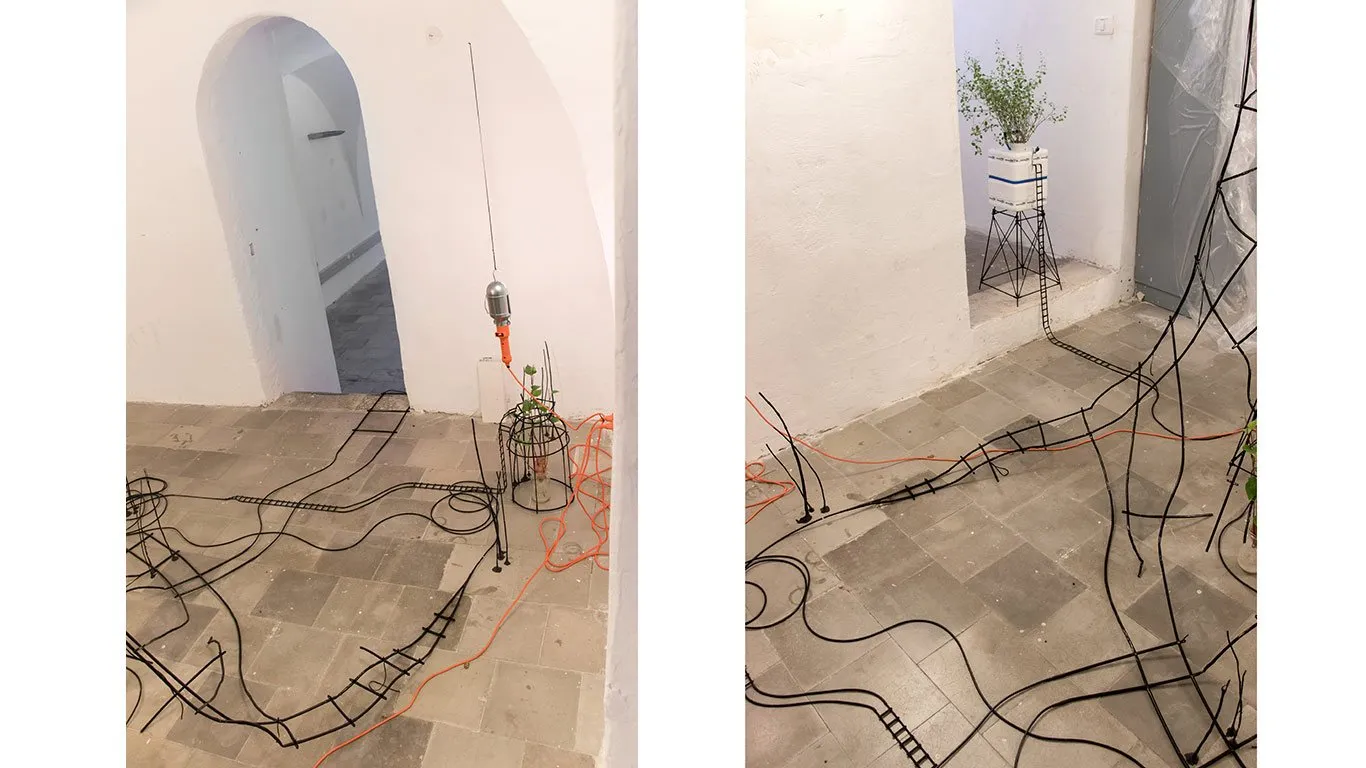
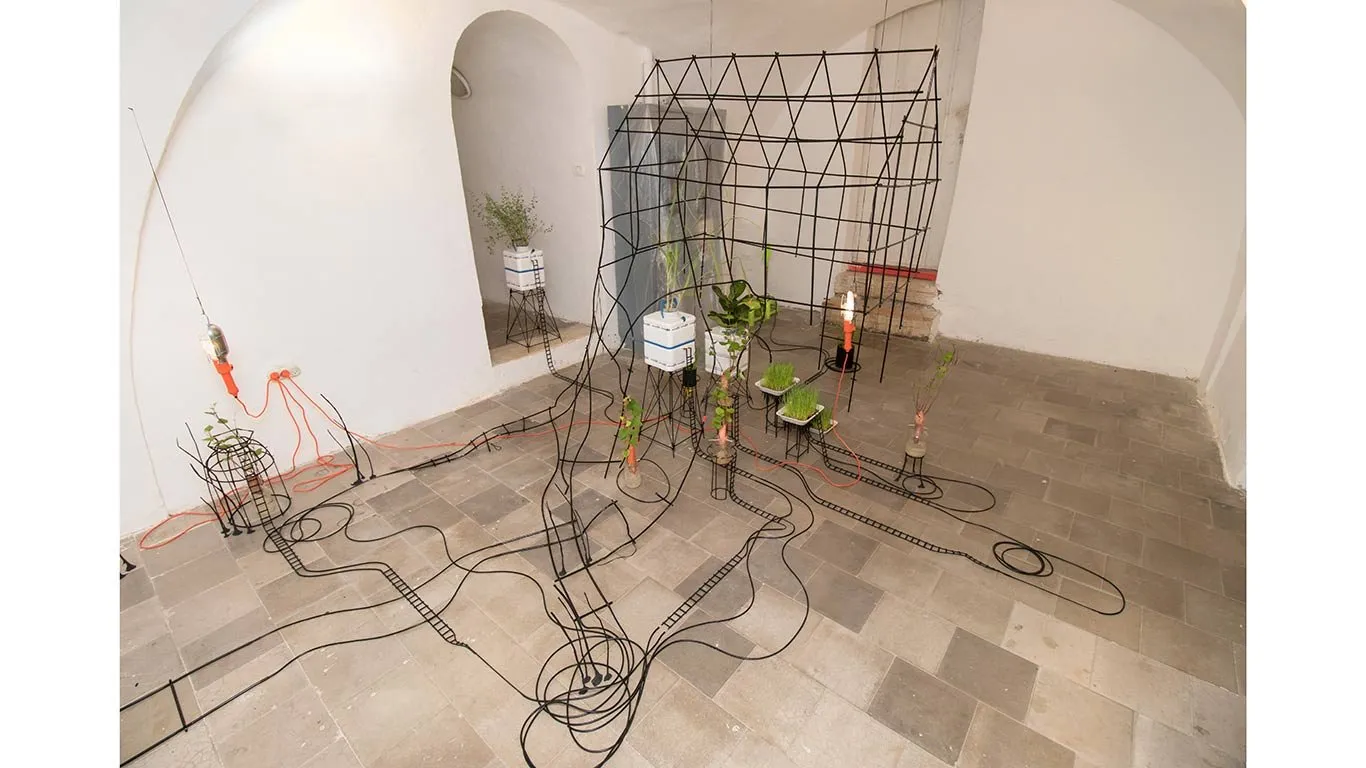
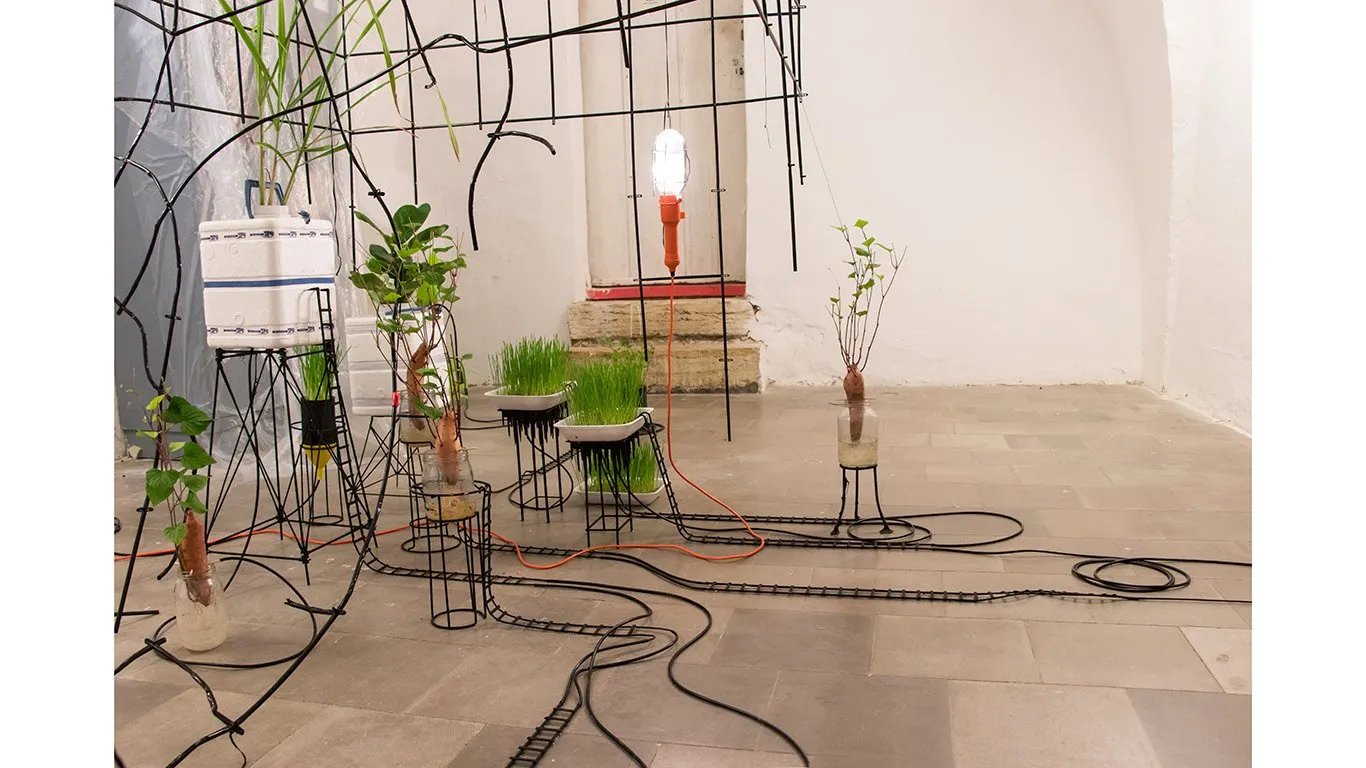
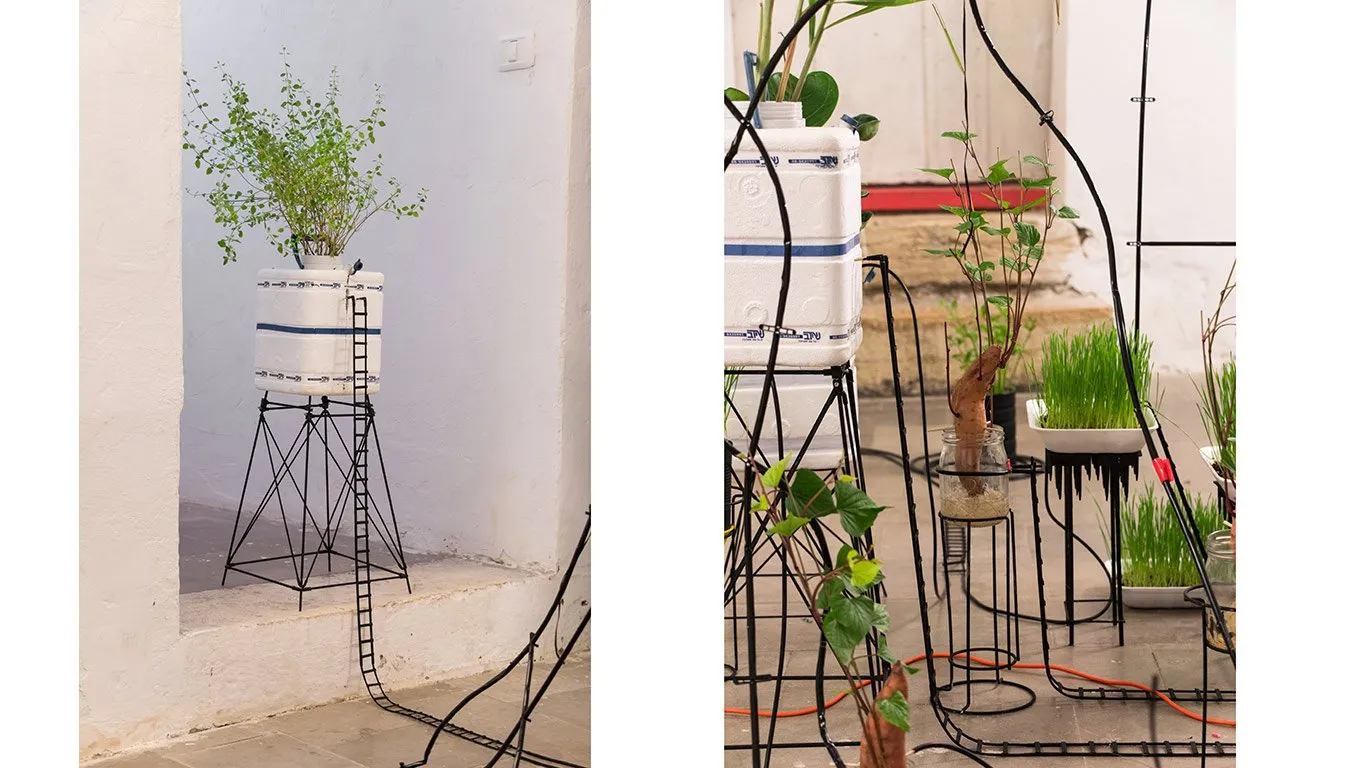
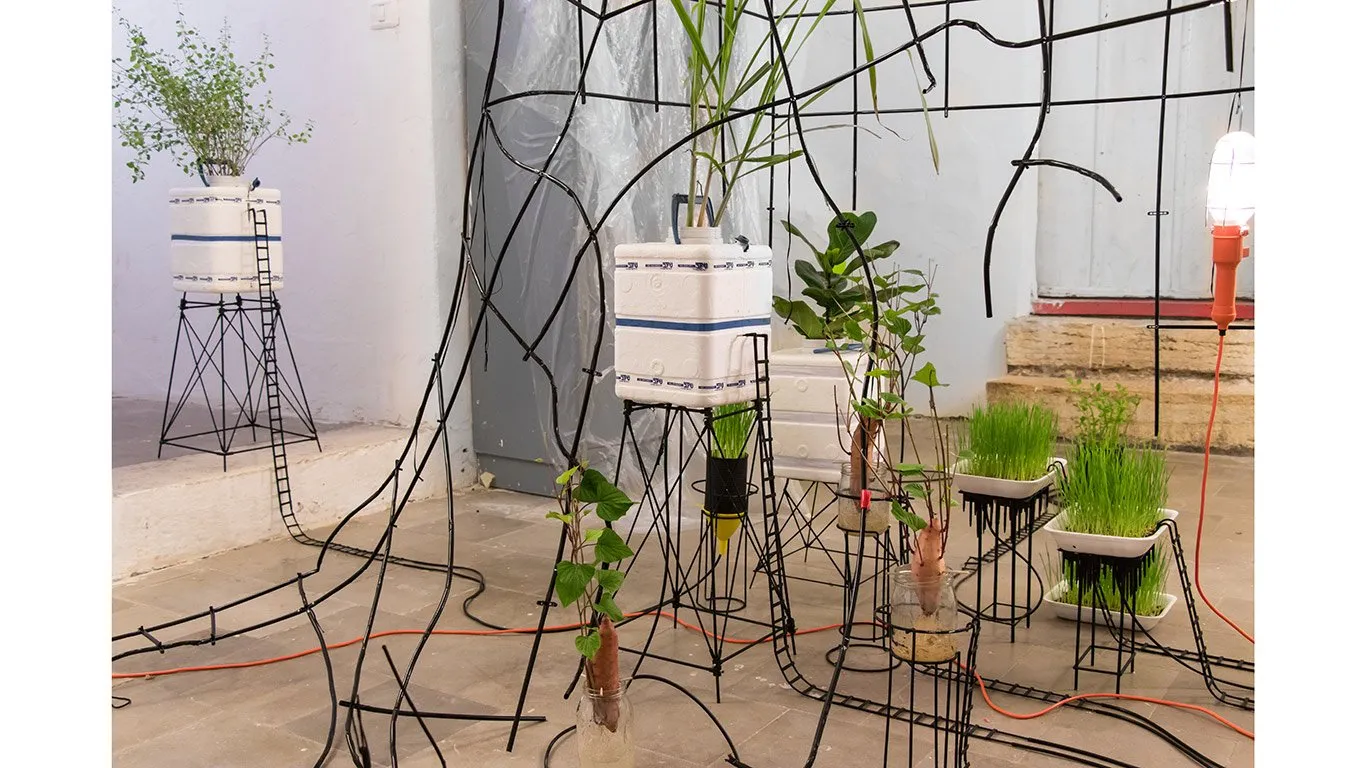
“gomleiDATA” — Hansen House, Jerusalem, 2017 (curators: Ilanit Konopny, Tali Kayam). Drinking straws, plants, polystyrene cooling jerrycans, tile spacers, lighting, irrigation tubing. Inbal Hoffman created the installation “You Get Used to the Smell” in response to the history of Hansen House, focusing on the “Doctor's House” that stands opposite the space where her work is installed. Using straws, irrigation tubes, branches and wire as lines, she draws in space, building a model of the entrance to the Doctor's House — originally a bakery for the residents, with the appearance of a greenhouse. Hoffman conjures floating contours that recall Conrad Schick's architectural plan of some hundred and thirty years earlier. The schematic structure — like a child's drawing of a “house” — is an archetypal form suspended in the air, a weightless mass working against gravity, leaking and coming apart as a joint between an architectural world and a world of nature. On its surface she grows a hanging garden, like the Hanging Gardens of Babylon — tended and meticulous. But her garden is a collapsing greenhouse, made of cheap, everyday materials that encourage natural processes of neglect, rot and withering. Beside the model the artist places polystyrene drinking vessels planted with edible and aromatic plants, raised on water-tower-like structures. Around them float jars carrying domestic seedlings and garden plants, like islands of organic growth. From the floor rises vegetation built from plants that wilted in the artist's own home, which she re-sculpts — dismantling their original form and building new hybrids and species. Her greenhouse flowers and withers at once. The water tower appears as a double-edged image tied to the idea of the self-sufficient farmstead: a reminder of rainwater cisterns or grain silos — structures that symbolize an independent economy, bound in collective memory to the early kibbutzim and “Tower and Stockade” days — while at the same time recalling the watchtowers of prisons and detention camps. Hoffman weaves together two parallel narratives of self-sufficiency, the utopian and the dystopian, mixing protection, independence and autonomy with confinement, exile and isolation. The installation lives and develops — breathing and shedding, changing throughout the run of the exhibition — speaking of permanence and transience in nature, and of the unraveling of the idea of the garden, and of society. — Ilanit Konopny, curator